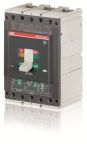
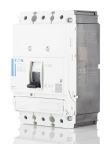
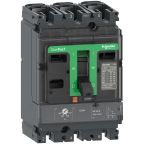
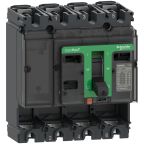
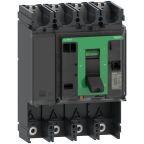
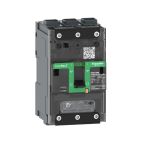
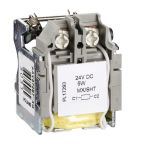
MCCBs
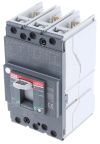
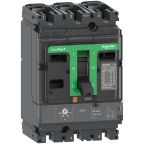
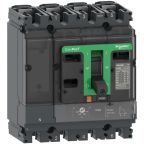
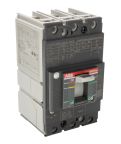
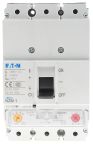
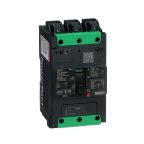
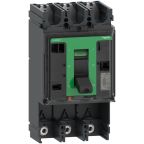
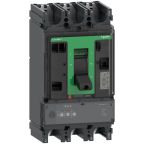
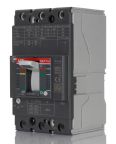
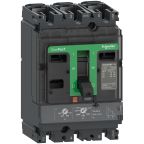
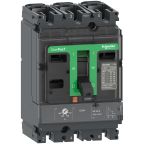
Moulded Case Circuit Breakers (MCCBs) are essential protective devices that interrupt electrical circuits to guard against overcurrent and short-circuits. They protect a wide range of electrical systems and equipment, from industrial machinery to commercial installations.
MCCBs are commonly used in low-voltage power distribution systems (typically up to 1,000 V AC and 1,500 V DC in accordance with IEC 60947-2) and are capable of handling higher current levels than Miniature Circuit Breakers (MCBs). Typical MCCBs have rated currents ranging from 10 A to 2,500 A, with breaking capacities of up to 200 kA, depending on frame size and manufacturer specifications.
How Does an MCCB Work?
A Moulded Case Circuit Breaker (MCCB) is designed to protect electrical circuits from overloads and short circuits using a combination of thermal, magnetic, and mechanical components.
At its core, an MCCB consists of three main elements: a current-carrying bimetallic strip (in thermal-magnetic types) or electronic sensing system, a magnetic trip mechanism, and a mechanical latching system that holds the contacts closed under normal operation.
- Thermal Tripping Process: As the current exceeds the rated limit, the bimetallic strip heats up and bends. This releases the latch, opening the contacts and interrupting the circuit to prevent conductor overheating in accordance with inverse time-delay characteristics defined in IEC 60947-2. This means that the MCCB trips more quickly at higher overcurrents.
- Magnetic Tripping Process: For sudden high-current faults, such as short circuits, the high fault current generates a strong magnetic field that rapidly activates the trip mechanism, causing the contacts to separate almost instantaneously to limit fault energy.
- Arc Extinction: When contacts separate under load, an arc forms. MCCBs are equipped with arc chutes and deionisation plates to split, cool, and extinguish the arc safely, ensuring controlled interruption within the rated breaking capacity.
- Reset and Types: After tripping, the MCCB can be manually reset once the fault condition has been cleared. Some models also support motorised mechanisms for remote resetting and operation. MCCBs are available in various configurations, including fixed-mounted and withdrawable (draw-out) types, as well as with thermal-magnetic or electronic-trip units.
Types of MCCB
MCCBs come in several types, each designed for specific protection and operational needs.
Fixed Thermal-Magnetic MCCB
Fixed thermal-magnetic moulded case circuit breakers are the most common type, featuring a built-in bimetallic strip and magnetic trip unit with factory-set or limited adjustable settings. They protect circuits from overloads and short circuits within a predetermined current range, commonly from 10 A to 800 A depending on frame size.
Their simple electromechanical design offers reliable protection, making them suitable for general industrial and commercial distribution boards where load conditions are predictable.
Adjustable Thermal-Magnetic MCCB
Similar to the fixed type, an adjustable thermal-magnetic MCCB allows adjustment of the thermal and/or magnetic trip settings within defined limits. Users can fine-tune overload protection to match the conductor size and load profile. Current ratings commonly extend up to 1,600 A depending on manufacturer series.
This type is used in industrial plants, motor control centres (MCC panels), and main distribution boards requiring coordination with downstream protective devices.
Electronic Trip Units
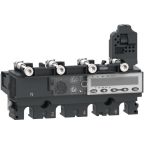
These MCCBs use current transformers and microprocessor-based trip units to monitor current precisely. They can offer adjustable long-time, short-time, instantaneous, and ground-fault protection functions (LSIG), as well as metering and communication capabilities. Current ranges typically extend up to 2,500 A.
Electronic trip MCCBs are ideal for critical industrial and commercial systems requiring accurate protection, selectivity, and integration with energy management or building management systems (BMS).
Motor Protection Circuit Breakers (MPCB)
Motor protection breakers (MPCBs) are specifically designed for motor branch circuits, combining overload, short-circuit, and phase-loss protection.
MPCBs allow for high inrush currents during motor startup while protecting against sustained overcurrent conditions, and are widely used for pumps, compressors, conveyors, and other motor-driven equipment.
While MPCBs share functional similarities with MCCBs, they are classified separately under IEC 60947-4-1 (motor starters), though some MCCBs can be configured for motor protection applications.
Difference Between an MCB and an MCCB
Miniature Circuit Breakers (MCBs) and Moulded Case Circuit Breakers (MCCBs) both serve as protective devices in electrical systems, but they are designed for different current levels and installation environments.
Current Rating & Frame Size
MCBs are intended for lower-current circuits, typically rated up to 125 A in accordance with IEC 60898 or IEC 60947-2, and are used in final circuits within residential and light commercial installations.
MCCBs handle a wider current range, from approximately 10 A up to 2,500 A, and use larger moulded insulating frames to accommodate higher fault levels and adjustable trip mechanisms.
Breaking Capacity & Trip Mechanism
MCBs typically have breaking capacities ranging from 6 kA to 10 kA in standard commercial installations (higher ratings are available in industrial variants).
MCCBs are available with breaking capacities that can exceed 150–200 kA, depending on the model and system voltage. MCBs generally use fixed thermal-magnetic trip curves (e.g., B, C, D curves under IEC 60898-1).
MCCBs may use thermal-magnetic or electronic trip units, allowing adjustable protection settings and coordination with upstream and downstream devices.
Applications & Trip Time
MCBs are typically used for branch circuits such as lighting and socket outlets, where fault levels are relatively low and settings are not adjustable.
MCCBs are typically installed in main distribution boards, sub-distribution panels, motor feeders, and incomer circuits where higher fault levels, discrimination, and adjustable protection are required.
Cost, Remote Operation & Durability
Miniature Circuit Breakers (MCBs) are generally lower in price and simple to install but generally offer limited adjustability and accessory integration.
MCCBs are built for higher mechanical endurance and electrical endurance ratings, often supporting accessories such as auxiliary contacts, shunt trips, under-voltage releases, and motor operators for remote switching and integration into automation systems.
How to Select the Right MCCB
Selecting the right Moulded Case Circuit Breaker (MCCB) ensures reliable protection and prevents damage to electrical systems. Key considerations include:
- Calculate Design Current: Determine the maximum continuous current under normal load and ensure the MCCB rated current (In) is equal to or greater than the calculated load current.
- Assess Breaking Capacity (Icu/Ics): Select an MCCB with an ultimate breaking capacity (lcu) exceeding the prospective short-circuit current at the installation point, as determined by fault level calculations.
- Choose Trip Unit Type: Thermal-magnetic units are suitable for general protection, while electronic trip units allow precise adjustment of long-time, short-time, instantaneous, and ground-fault functions.
- Consider Selectivity & Coordination: Review time-current curves to ensure proper coordination with upstream and downstream protective devices to minimise unnecessary power interruptions.
- Apply Derating Factors: Adjust for environmental conditions such as ambient temperature, enclosure type, altitude, or grouping multiple breakers to ensure reliable operation and prevent overheating or nuisance tripping.
Key Technical Parameters to Compare When Selecting an MCCB
- Rated Operational Voltage (Ue) and Rated Insulation Voltage (Ui): Ensure that the Moulded Case Circuit Breaker (MCCB) is rated for the system’s operational voltage and insulation coordination requirements to prevent dielectric failure under both normal and transient conditions.
- Rated Short-Time Withstand Current (Icw): Important for systems requiring time-delay protection and selectivity, particularly where downstream breakers must clear faults first.
- Number of Poles (3P, 4P): Select the appropriate MCCB circuit breaker configuration based on system setup, such as three-phase three-wire or three-phase four-wire systems with neutral protection.
- Mounting Type and Accessories: Consider fixed or draw-out mounting, as well as compatibility with auxiliary contacts, shunt trips, under-voltage releases, and communication modules.
- Compliance with Standards: Verify conformity to IEC 60947-2 or relevant national standards to ensure suitability for industrial low-voltage installations.
- Rated Breaking Capacity (Icu/Ics): Verify that the ultimate breaking capacity (Icu) exceeds the prospective short-circuit current at the installation point. Where the breaker must remain serviceable after a fault, ensure the service breaking capacity (Ics) also meets this requirement.
Typical Applications of MCCBs
MCCBs are widely used to protect electrical systems across diverse industries, ensuring safety and preventing equipment damage.
- Industrial Plants & Manufacturing: Industrial MCCB breakers protect motors, transformers, feeders, and production machinery in factories and manufacturing subsectors, including automotive, electronics, and heavy machinery.
- Data Centres & Commercial Buildings: Provide main and sub-distribution protection for power distribution units (PDUs), HVAC systems, and essential building services.
- Oil, Gas & Mining: Provide reliable overcurrent protection for pumps, compressors, and processing equipment.
- Marine & Shipping: MCCBs are used in marine switchboards to protect electrical panels, generators, and navigation systems.
- Utilities & Infrastructure: Protect electrical distribution in power generation, substations, water treatment plants, and renewable energy installations such as solar farms and wind turbines.
- Hospitals & Critical Facilities: Installed in main and sub-distribution boards to protect essential services, coordinated with backup generators and UPS systems.
How to Order MCCBs in Malaysia
Find and buy the right MCCBs in Malaysia for industrial, commercial, and critical applications. We supply high-quality moulded case circuit breakers from trusted brands such as Siemens, Schneider Electric, and Eaton. Explore our catalogue to source MCCBs, miniature circuit breakers, and electronic circuit breakers for all your electrical protection needs.
Browse the available MCCBs by current rating, breaking capacity, number of poles, terminal type, and mounting configuration to match your application requirements. Product datasheets provide detailed technical specifications, compliance information, and accessory compatibility to support informed selection. For full details on delivery times, costs, and coverage across Malaysia, refer to our Delivery Information page.