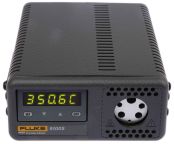
Temperature Calibrators
Temperature measurement is a common procedure in laboratories and across industrial environments, making it crucial to maintain accurate temperature data through regular calibration. Industrial temperature instruments are calibrated using temperature calibrators. Depending on the application, temperature calibration equipment ranges from handheld portable temperature calibrator units for laboratory and field use to heavy-duty drywell calibrators for on-site and workshop calibration.
What Are Temperature Calibrators
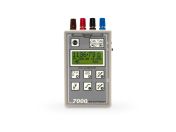
Temperature calibrators are compact devices, available in analogue or digital formats, designed to be robust and suitable for on-site industrial conditions. They can calibrate an instrument in its operating environment without removing it from the process.
Different users may define temperature calibrators differently based on their application. Commonly, the term refers to a portable device designed to simulate temperature sensors under real operating conditions. These devices are commonly called a temperature simulator calibrator.
Others define temperature calibrators as controlled temperature sources with calibrated displays, such as drywell calibrators, furnaces, or ovens. Alternatively, some use the term to describe devices that either simulate temperature sensor signals or directly measure temperature.
Regardless of definition, all temperature calibration equipment share the same core function: they are used to assess the accuracy of a temperature measurement device against a known reference within specified uncertainty limits.
These devices are commonly used by technicians and calibration-certified engineers for testing temperature transmitters, controllers, alarms, and computer-based monitoring systems.
Types of Temperature Calibrators
The commonly used types of temperature calibrators are:
Thermocouple Calibrator
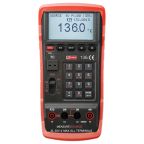
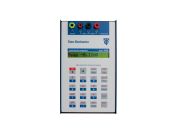
A thermocouple calibrator (often referred to as a TC calibrator) is used for calibrating devices that use thermocouples as input signals, such as meters, controllers, transmitters, data loggers, and recorders. These devices function as a high-accuracy temperature simulator calibrator, sourcing and measuring millivolt (mV) signals to simulate various thermocouple types like J, K, T, and E in accordance with IEC 60584 standards.
Modern thermocouple calibrators are often handheld and rugged, making them the preferred portable temperature calibrator for onsite troubleshooting in power plants and manufacturing facilities where quick sensor verification is required.
Drywell Calibrator
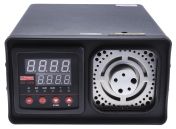
Drywell calibrators are used for checking dial thermometers, digital thermometers, bulb switches, and temperature probes that require calibration above or below ambient temperatures. Unlike a liquid temperature calibrator, a drywell uses a heated or cooled metal block with precision-drilled inserts to house the sensors, eliminating the mess and safety risks associated with oils or fluids. This makes them a highly efficient thermometer calibrator for food processing and pharmaceutical industries where hygiene and "dry" heat sources are mandatory.
RTD Calibrator
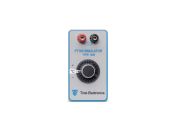
An RTD calibrator is specifically designed for testing, calibrating, and documenting the performance of Resistance Temperature Detectors (RTDs) and transmitters. It works by simulating or measuring the precise electrical resistance (ohms) that corresponds to specific temperature points, allowing technicians to verify the accuracy of the entire measurement loop.
These temperature calibration equipment are essential for high-precision environments, as they support common RTD standards such as Pt100 and Pt1000 in accordance with IEC 60751, while accommodating 2-wire, 3-wire, or 4-wire configurations to ensure maximum signal integrity and minimise lead resistance errors in high-accuracy applications.
How Do Temperature Calibrators Work?
Temperature calibrators function by providing a known, traceable reference point against which a secondary sensor is compared to determine its accuracy and error limits. These instruments are designed to accurately measure, generate, or simulate the low-level electrical signals, such as millivolts or resistance, encountered in industrial sensors.
For instance, a temperature simulator calibrator can mimic the voltage produced by the two dissimilar metals in a thermocouple or the precise resistance of an RTD, allowing you to verify a transmitter’s output without a heat source.
Choosing the Right Temperature Calibrator
Here are some important points to consider when choosing the most effective temperature calibration equipment for your application.
- Determine Your Temperature Range: Ensure the calibrator supports the minimum and maximum temperatures required, whether for sub-zero cold storage monitoring or high-temperature industrial processes.
- Match Sensor Compatibility: Verify if you need a specialised thermocouple calibrator for millivolt signals or a dedicated RTD calibrator for resistance-based sensors.
- Evaluate Accuracy and Stability: For critical measurements, apply accepted calibration practices such as maintaining a minimum 4:1 accuracy ratio between the calibrator and the device under test.
- Consider If You Need Portability: If you are performing field work, such as calibrating on-site in a large facility, a portable temperature calibrator with a long battery life and rugged housing is essential.
- Determine If You Need Additional Features: Look for advanced capabilities like data logging, automated calibration setpoints, or moisture resistance for harsh environments in Malaysia.
Industrial Applications of Temperature Calibrators
In Malaysia’s diverse industrial landscape, temperature calibrators are indispensable tools for maintaining safety, quality, and regulatory compliance across multiple sectors.
- Oil and Gas Refineries: Technicians use a TC calibrator to verify heat sensors on pipelines and distillation columns to prevent overheating and hazardous pressure buildup.
- Pharmaceutical and Biotech: A high-precision thermometer calibrator is critical for validating autoclaves, incubators, and cold-chain storage to meet strict GMP and Ministry of Health standards.
- Food and Beverage Processing: Portable temperature calibration equipment ensures pasteurisation and cooking temperatures are consistent, preventing spoilage and ensuring consumer safety.
- Electronics and Semiconductor Manufacturing: An RTD calibrator is often used to maintain the precise thermal profiles required for solder reflow ovens and environmental test chambers.
- Power Generation: High-temperature thermocouple calibrator models are used to monitor turbine exhausts and boiler systems where extreme heat must be measured with absolute reliability.
- HVAC & Building Management: Maintenance teams rely on a portable temperature calibrator to adjust thermostats and air handling units in commercial buildings and data centres.
Maintenance and Best Practices for Temperature Calibrators
Following a consistent maintenance schedule ensures that your temperature calibration equipment remains accurate and reliable for long-term industrial use.
- Clean the Unit Regularly: Wipe the exterior with a soft, dry cloth and ensure that the sensor ports of your portable temperature calibrator remain free from dust and debris.
- Inspect for Physical Wear: Regularly check the housing, test leads, and probes for any signs of fraying, damage, or loose connections that could affect signal integrity.
- Perform Routine Calibration: Ensure your thermocouple calibrator or RTD calibrator is serviced at defined intervals using traceable reference standards.
- Keep Software Updated: Periodically check for firmware updates from the manufacturer to improve the performance and feature set of your temperature simulator calibrator.
- Store in a Controlled Environment: When not in use, keep your instruments in a cool, dry location to prevent internal corrosion and drift in sensitive electronic components.
- Monitor Power Sources: Check and replace batteries frequently, or maintain the charge on rechargeable units, to prevent low-power errors during critical field calibrations.
Supplier and Distributor of Temperature Calibrators in Malaysia
RS is a trusted supplier and distributor of temperature calibrators in Malaysia. We carry both fixed and portable temperature calibrators for field applications from renowned brands like Fluke, Time Electronics, and Extech at a great price.
RS also carries other temperature measuring equipment like infrared thermometers, temperature probes, and thermal imaging cameras. For more information on our delivery options and fees, please visit our delivery page.