Castor Wheels
Castor wheels are assemblies fitted to the base of equipment to enable controlled movement. A typical castor consists of a wheel mounted within a fork or housing, attached via a mounting plate, bolt hole, or threaded stem. They are versatile solutions suitable for a wide range of applications, from carts, trolleys, racks, and machinery bases in commercial and industrial settings in Malaysia.
Castors are available in configurations suitable for light-duty applications through to heavy-duty industrial loads, depending on wheel diameter, material, bearing type, and mounting design.
Where Can Castor Wheels be Used?
Castor wheels are versatile components that support smooth movement across a variety of settings and equipment. They are commonly found in both industrial and commercial applications, helping to transport objects safely and efficiently. Typical uses include:
- Aircraft assembly tooling and ground-support equipment
- Automotive manufacturing lines and parts handling trolleys
- Platform trucks, mobile workbenches, and tool cabinets
- Hospital beds, medical carts, and equipment stands
- Storage racks and warehouse picking carts
- Luggage handling systems and portable equipment
Castors are specified according to load capacity, duty cycle, floor condition, and environmental exposure, making correct selection essential for safe operation.
Types of Castor Wheels
Castor wheels come in a variety of types and configurations to suit different applications and load control requirements. The main categories include:
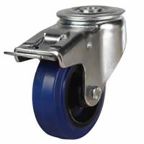
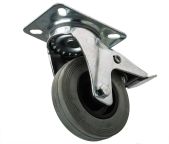
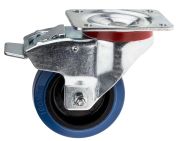
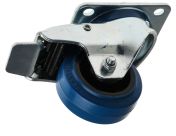
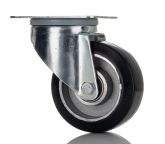
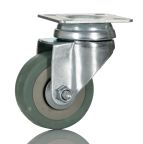
- Swivel Castor Wheels: These wheels rotate 360° via a swivel head, allowing objects to move smoothly in any direction. Ideal for manoeuvrable equipment like workbenches or electrical tool kit trolleys.
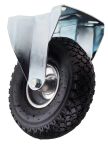
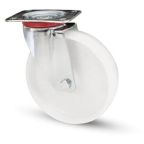
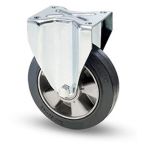
- Fixed (Rigid) Castors: Designed for linear movement, fixed castors keep objects moving straight along a single path. They are often paired with swivel castors for controlled steering of heavier loads.
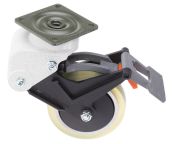
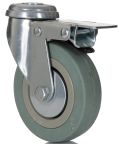
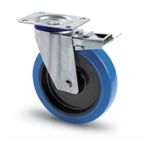
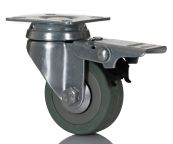
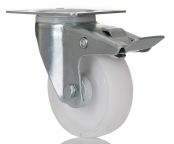
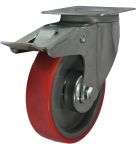
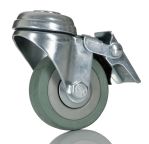
- Braked Castors: Equipped with an integral pedal or locking mechanism, braked castors can secure equipment in place, preventing unwanted movement. Some designs lock only the wheel, while total-lock systems secure both wheel rotation and swivel action.
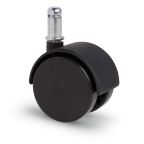
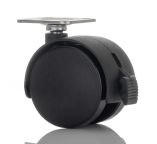
When selecting a castor wheel from a supplier, it’s important to consider load capacity, mounting method, wheel material, and bearing type. Common mounting styles include top plate, single bolt hole, screw-in, or threaded stem castors, each suited to different attachment methods and weight requirements.
Castors are generally classified by duty level, though exact capacity varies by manufacturer and wheel diameter:
- Light-duty Castor Wheel: Typically used for furniture and light carts.
- Medium-duty Castor Wheel: Ideal for workbenches, warehouse carts, and equipment stands.
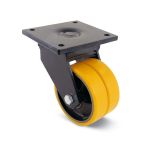
- Heavy-duty Castor Wheel: Designed for industrial machinery, large racks, and other high-load applications.
Choosing the right type and rating ensures safe, smooth movement while maximising durability and performance for your specific application.
What Are Castor Wheels Made of?
Castor wheels are manufactured from a variety of materials, each chosen to suit specific load capacities, floor surfaces, and environmental conditions. Common materials include:
- Steel and Cast Iron: Extremely strong and durable, ideal for heavy-duty industrial applications.
- Aluminium: Lightweight yet robust, suitable for medium-load equipment and corrosion-resistant environments.
- Polypropylene and Nylon: Hard-wearing plastics that offer smooth rolling, chemical resistance, and quiet operation for medium to light loads.
- Polyurethane (PU): Provides a balance between load capacity and floor protection. PU castor wheels offer good abrasion resistance and are widely used in industrial handling equipment in Malaysia.
- Rubber: Rubber castor wheels provide cushioning, reduces noise, and protects floors, commonly used for furniture, trolleys, and medical equipment.
- Non-Marking Compounds: Available in rubber or synthetic compounds, these wheels prevent scuffing or staining on sensitive surfaces.
How Do I Measure Castor Wheels?
Accurate measurement is essential when selecting castor wheels to ensure proper fit and performance. Key dimensions to check include:
- Mounting Plate or Bolt Pattern: Measure the height and width of the top plate, and for bolt-hole castors, measure the distance between the centres of the holes.
- Wheel Diameter: Measure the wheel across its centre while it is lying flat to determine the correct size for your application. Larger diameters typically improve rolling efficiency and obstacle clearance.
- Overall Height (Loaded Height): Measure from the mounting surface to the floor, including the wheel and housing. In load-sensitive applications, consider both unloaded and loaded height if specified.
- Wheel Width: Important for load distribution and floor pressure, particularly for heavy equipment.
Taking these measurements carefully helps guarantee a secure installation and optimal movement for your castor wheels.
How to Choose Castor Wheels in Malaysia
Choosing the right castor wheels ensures smooth, safe, and efficient movement of your equipment or furniture. Key factors to consider include:
- Floor Conditions: Hard, smooth surfaces work best with steel or nylon wheels, while rubber or non-marking castor wheels protect delicate floors and reduce noise.
- Load Capacity: Calculate the total weight your equipment will carry and select castors rated above this load to ensure durability and safety.
- Wheel Diameter: Larger diameter wheels provide reduced rolling resistance and improved manoeuvrability over uneven surfaces and floor thresholds.
- Wheel Material: Select castor wheel material based on floor type, load capacity, noise requirements, and chemical exposure. Polyurethane, for example, offers a balance of durability and floor protection suitable for a wide range of industrial and commercial environments.
- Bearing Type: Choose from plain bore, roller bearing, or ball bearing options based on the application's load and movement requirements, as bearing type directly influences rolling resistance and suitability for continuous or high-frequency operation.
- Mounting & Frame: Choose a mounting type that matches your equipment, such as top plates, bolt holes, or threaded stems.
- Environmental Conditions: For industrial, chemical, or outdoor applications, consider corrosion-resistant, heavy-duty, or weatherproof materials.
Industrial Applications of Castor Wheels
Castor wheels are essential for enabling smooth, safe, and efficient movement across a wide range of industries. Common applications include:
- Manufacturing: Moving machinery, workstations, and trolleys on production floors.
- Aerospace: Handling parts, tools, and assembly equipment in high-precision environments.
- Automotive: Moving engines, components, and assembly-line equipment.
- Healthcare: Supporting hospital beds, medical trolleys, and diagnostic equipment with stability and mobility.
- Construction: Transporting scaffolding, materials, and tools across job sites.
- Logistics: Streamlining material handling in shipping, receiving, and warehouse operations.
- Food & Beverage: Using hygienic, non-marking wheels for mobile racks, trolleys, and processing equipment.
How to Order Castor Wheels in Malaysia
Find and buy the right castor wheels in Malaysia for industrial, commercial, or healthcare applications at competitive prices. Choose from trusted brands such as Tente, LAG, and Guitel Hervieu to ensure quality, durability, and reliable performance. Browse our online selection to source standard castors, heavy-duty castor wheels anti-vibration mats, and levelling stands for all your equipment and workplace support needs.
When ordering castor wheels, choose the appropriate configuration from a trusted supplier. Swivel for manoeuvrability, fixed for straight-line movement, or braked for secure positioning when stationary. Ensure the castor provides sufficient load capacity and the correct wheel diameter for your application.
Select a suitable mounting style and frame material to match your equipment, and confirm the wheel material is appropriate for the operating environment, including floor type and exposure conditions. Once you’ve identified the right specifications, add the selected items to your basket and complete your purchase online.
For full details on delivery times, shipping costs, and coverage across Malaysia, refer to our Delivery Information page.