Function Generators
A function generator is a versatile test and measurement instrument that produces electrical waveforms of various shapes and frequencies. When the generator is connected to an electronic circuit, it generates controllable signals with adjustable frequencies, amplitude outputs, and DC offsets. Function generators are essential tools for designing, prototyping, and troubleshooting electronic circuits, saving time by eliminating the need to build dedicated oscillators for testing purposes.
Function generators typically produce a range of different waveforms, such as sine waves, triangular waves, sawtooth waves, and square waves. The signal generator can produce repetitive signals or modulated to suit different testing needs. The output can be monitored by connecting the function generator to an oscilloscope, which visually displays the waveform characteristics. Many modern function generators feature built-in displays for real-time monitoring of output parameters such as frequency, amplitude, and waveform type.
Frequency Range and Waveforms
Function generators vary widely in frequency range and waveform capabilities depending on the model and intended application. Typical frequency ranges and waveforms include:
- Sine wave: from as low as 0.001 Hz (1 mHz) up to several MHz or even GHz in high-end RF models (0.001 Hz to 200 MHz+).
- Square wave: generally up to hundreds of MHz (0.001 Hz to 160 MHz).
- Triangle wave: typically up to a few hundred kHz to low MHz (0.001 Hz to 800 kHz).
- Sawtooth wave: usually similar to triangle wave frequency ranges (0.001 Hz to 1 MHz).
Function Generators vs. Arbitrary Waveform Generators (AWGs)
Function generators generally provide more functions and offer the ability to create a custom waveform output of any size. Function generators offer a periodic waveform.While both devices generate electrical signals, there are key differences:
- Function Generators: Produce standard periodic waveforms (sine, square, triangle, sawtooth). They are generally more affordable and simpler to use.
- Arbitrary Waveform Generators (AWGs): Offer advanced functionality, including the ability to create and output custom, non-periodic waveforms with high precision and memory depth. AWGs are ideal for complex signal simulation, such as emulating real-world signals or communication protocols.
In summary, function generators are suitable for most routine testing, while AWGs provide greater flexibility for specialised applications.
How Function Generators Work
A function generator operates by generating various repetitive electrical waveforms, such as sine, square, and triangle waves, which are fundamental for testing electronic circuits. Internally, a core oscillator produces a basic signal, which is then shaped by digital-to-analogue converters (DACs) and controlled by precision circuitry.
With programmable function generators, users can precisely manipulate parameters like frequency, amplitude, and waveform type via front-panel controls or through a programmable interface, allowing for versatile signal injection and circuit analysis.
Choosing the Right Function Generator for Your Needs
Here are the steps to find the correct type of function generator for your specific requirements:
- Define your application: Determine if you need a function generator for educational purposes, a hobby project, professional R&D, or specialised RF testing.
- Consider specifications: Consider the necessary frequency range, the variety of waveforms required (e.g., sine wave generators), resolution, and signal stability for accurate testing.
- Consider output voltage/amplitude requirements: Ensure the function generator can produce the necessary signal strength for your target circuit or component.
- Check for other features: Ensure the unit includes features like modulation, sweep, and arbitrary waveform support. These advanced features expand the generator's capabilities for complex testing scenarios.
Safety Tips and Best Practices
It's important to ensure safe operation when using a function generator to prevent damage to the device, the circuit under test, and yourself. Here are some key safety tips and best practices:
- Read the user manual and understand device limits: Always familiarise yourself with the specific operating instructions and limitations of your function generator before use.
- Ensure proper earthing and safe signal levels: Connect the instrument to a properly earthed outlet and set appropriate signal amplitude to avoid over-voltage conditions on your circuit.
- Avoid short circuits or overloading outputs: Never short-circuit the output terminals or exceed the specified load impedance, as this can damage the internal amplifier.
- Verify connections before powering up: Double-check all wiring and connections to the circuit under test to prevent accidental damage or unexpected behaviour.
- Perform regular maintenance and calibration: Periodically inspect cables, connectors, and the device itself for wear or damage, and consider professional calibration for continued accuracy.
Common Applications in Education and Industry
Function signal generators have many uses across different industries, proving indispensable for design, testing, and troubleshooting:
Education
In educational settings, function generators are fundamental tools for teaching electrical engineering and physics principles. Students use them to explore AC circuit behaviour, demonstrate concepts like resonance and filtering, and gain practical experience in designing and testing electronic circuits.
Electronics
Function generators are essential to integrated electronic testing, validating circuit designs and component functionality during the design, development, and production phases. They are used in embedded systems development to simulate sensor signals and test microcontroller inputs, and in digital circuits for clock signal generation and logic testing. For analogue signal processing, they are essential to analyse filter responses, amplifier behaviour, and modulation. A function waveform generator provides the necessary signals for performance evaluation and troubleshooting, ensuring product reliability.
Telecommunications
Function generators are widely used in telecommunications for testing communication links, verifying modulation schemes, and simulating various signal environments. A programmable function generator can simulate complex signals to assess receiver sensitivity, measure signal-to-noise ratios, and ensure reliable data transmission.
Automotive
In the automotive industry, portable function generators are commonly used to simulate sensor signals and test electronic control units (ECUs). They help engineers diagnose wiring issues, verify component functionality, and develop new automotive electronic systems, contributing to vehicle performance and safety.
Medical Devices
Function generators are critical for testing and calibrating sensitive medical equipment. They are used to simulate physiological signals, verify the accuracy of diagnostic instruments, and ensure the safety and reliability of therapeutic devices, adhering to stringent medical standards.
Trusted Function Generator Manufacturer, Supplier & Distributor in Malaysia
RS is your trusted source for function generators in Malaysia. As a leading manufacturer, supplier, and distributor, we offer a wide selection of high-quality function generators from top brands like Aim-TTi, Keysight Technologies, and our own RS PRO. Our prices also cater to diverse budgets. Buy your function waveform generators from RS and experience quality, reliability, and expert advice.
You can also get portable or programmable function generators online, along with other test and measurement equipment, like frequency counters and oscilloscopes, to enable precise signal generation and analysis. We offer competitive prices and a seamless online ordering experience. Enjoy fast, nationwide doorstep delivery. For detailed delivery information and fees, visit ourDelivery page.
Related links
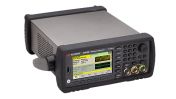
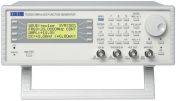
- RS PRO GFG8216A Function Generator & Counter 3MHz Max, Variable Sweep
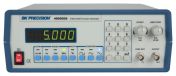
- BK Precision 4005DDS Function Generator 5MHz Max
- Chauvin Arnoux GX1030 Function Generator 30MHz Max
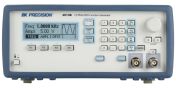
- BK Precision 4011A Function Generator 5MHz Max
- RS PRO RSFG-2230 Function Generator FM Modulation
- RS PRO AFG21005 Function Generator 5MHz Max, Variable Sweep
- RS PRO RSFG-2160MR Function Generator FM Modulation
- RS PRO RSFG-2260MRA Function Generator FM Modulation