Thermostatic Switches
Thermostatic switches are essential components in temperature control systems, enabling precise regulation of air or liquids in both domestic and commercial environments. RS Malaysia carries a wide range of thermostats, from thermostats with simple on/off temperature controls, to adjustable thermostats you can use to fine-tune temperature. We also stock capillary and bimetallic thermostat switches, as well as mechanical, digital, programmable, and smart thermostats with Wi-Fi connectivity.
What Does a Thermostatic Switch Do?
A thermostat switch monitors temperature changes by automatically opening or closing an electrical circuit at a preset threshold. This enables thermostat switches to maintain a constant temperature by switching heating or cooling systems on or off as needed. Common uses include regulating liquid temperatures in tanks and controlling air temperature in rooms, or enclosed systems like NEMA-rated electronic enclosures.
Capillary Thermostat Switches
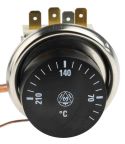
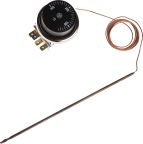
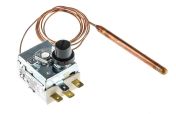
Capillary thermostats are widely used in everyday appliances like ovens and refrigerators, as well as industrial HVAC systems. Capillary thermostats are easy to install and provide reliable temperature control.
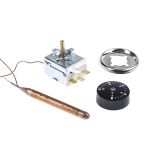
If you look inside a capillary thermostat, you will find a sensing bulb, a capillary tube, and a diaphragm, all filled with a fluid. As the temperature around the sensing bulb changes, the fluid inside expands or contracts. This change in volume creates pressure that is transmitted through the capillary tube to the diaphragm, which then actuates a mechanical switch to open or close the circuit.
Bimetallic Thermostat Switches
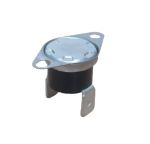
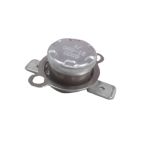
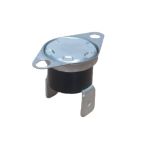
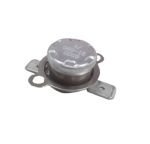
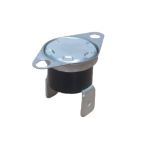
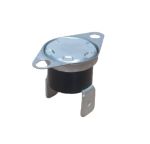
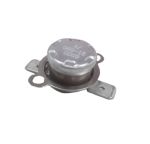
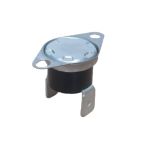
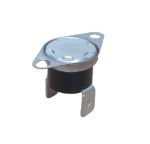
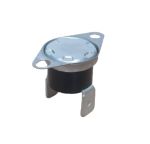
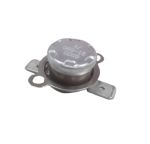
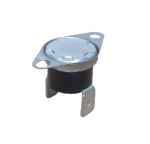
Bimetallic strip thermostats contain two bonded metals with different thermal expansion rates. Thermal expansion is the key to how these thermostats control temperature. The bimetallic strip acts as a contact breaker in an electric heating circuit. When the desired temperature is reached, the circuit is broken and the controlled climate stabilises.
Let's explore how a bimetallic strip thermostat functions in a heater.
- When the strip heats up: The bimetallic strip bends as one metal gets hotter than the other. Once it bends enough, electricity stops flowing through it, so the heater switches off.
- When the strip gets cold: The bimetallic strip stays relatively straight, allowing for electricity to flow through and the heater to turn on.
This simple yet effective mechanism provides snap-action switching for heat control switch applications.
Advantages of Thermostatic Switches
The key advantage of thermostatic switches is their automatic functionality. Once set, they operate without any manual input, continually monitoring the temperature and reacting as needed.
- Heating systems: Thermostats allow for ovens, water heaters or room heaters to self-regulate when the temperature drops below or rises above a set point.
- Cooling systems: Thermostats control fan systems in refrigerators, air conditioners and cooling fans for electronics. Thermostats also prevent these devices from overheating.
Normally Open (NO) vs. Normally Closed (NC) Thermostatic Switches
Thermostatic switches are characterised by their "normal" state and how they reset:
- Normally Open (NO): In a NO thermostatic switch, the electrical contacts are separated at its minimum or ambient temperature. The circuit closes when the temperature reaches the preset threshold. NO thermostatic switches can activate cooling fans when an engine overheats.
- Normally Closed (NC): Conversely, electric contacts remain in contact at its minimum or ambient temperature in NC thermostatic switches. The circuit opens when the temperature reaches the preset threshold, which can be used to cut power to heating elements to prevent overheating.
Automatic vs. Manual Reset Switches
- Automatic reset switches revert to its normal state once a safe or predetermined temperature is reached. They accomplish this by automatically re-establishing or breaking the circuit as needed. On the other hand, some thermostatic switches require a human to physically perform an action to reset the switch and re-enable the circuit. This is especially true for switches designed for critical safety applications. For example, if a switch trips due to an extreme temperature event, it will remain in a tripped state until it is manually reset. This ensures that a human is present to check if it is safe to flip the switch back on before doing so.
Factors to Consider When Selecting a Thermostatic Switch
Here are the factors to consider when choosing a thermostatic switch for your specific application.
- Temperature Range and Accuracy: Your adjustable thermostat switch must be able to operate within the expected temperatures and manage temperature fluctuations effectively.
- Switch Type: Choose your switch type based on the level of precision needed. For example, a bimetallic strip thermostat switch is suitable for basic applications, while an electronic thermostat may be necessary for critical industrial or medical uses.
- Current/Voltage Rating: Ensure your chosen thermostat on off switch can safely handle the maximum current and voltage of your circuit.
- Mounting Style: Select a mounting type, such as surface, panel, duct, probe/remote, threaded, or clamp/strap, that best fits how your temperature control switch will be integrated with the work environment.
- Adjustability: Consider if you need an adjustable thermostat switch or an adjustable thermal switch for different temperature settings.
Adjustable Vs. Fixed Thermostatic Switches
Let's compare adjustable and fixed thermostatic switches.
Adjustable Thermostatic Switches
They are commonly found in HVAC systems such as home and office thermostats, and various industrial systems where process temperatures might need fine-tuning. These switches are ideal for use cases when the precise temperature threshold may vary, or when a system needs to adapt to different operating conditions. Adjustable switches tend to be more expensive than their fixed counterparts and are less precise than a factory-calibrated fixed switch.
Fixed Thermostatic Switches
End users are unable to alter the thermostat's trigger temperature because they are pre-set by the manufacturer. This tamper-resistant quality makes them ideal for safety and protection applications, where a precise and unalterable trip point is critical. Examples include over-temperature protection in appliances like water heaters and thermal cut-offs in motors. Fixed thermostatic switches are more cost-effective than adjustable switches and are also easier to install. However, if the set point needs to change, the entire switch must be replaced.
Key Applications of Thermostatic Switches
Here are some common use case scenarios for thermostatic switches:
- HVAC Systems: These thermostatic switches control the fans in furnaces, air conditioners and ventilation systems. This includes centralised air conditioning systems. They also manage compressors in air conditioners and refrigerators.
- Home Appliances: Thermostatic switches control temperatures to prevent overheating and maintain an optimum temperature range. For example, they cycle compressors in refrigerators and freezers to keep food fresh, as well as regulate heating elements in irons and hair dryers for user safety and performance purposes.
- Automotive: Thermostatic switches regulate a car's interior temperature and prevent car engines from overheating by activating cooling fans. They can also defrost windshields and rear windows by switching on heating elements.
- Industrial Equipment: Thermostatic switches maintain the safe operation of industrial equipment and strict process control standards. They act as safety cut-offs in motors, pumps and generators to prevent damage to equipment from excessive heat.
Leading Supplier and Distributor of Thermostatic Switches in Malaysia
RS is your go-to source for quality thermostatic switches. When it comes to products from industry leaders such as Honeywell, Jumo, and Sensata/Airpax, we make it a point to have ready stock. Explore our selection of adjustable capillary, bi-metallic and capillary switches for cost-effective temperature control solutions. We also carry other peripherals related to temperature and testing, such as micro limitswitches and thermal imaging cameras. For more details on our ordering process, delivery services, and delivery fees, please refer to our delivery page.
Related links
- Honeywell Thermostatic Switches
- Jumo Thermostatic Switches
- Thermostats
- Radiator Valves
- RS PRO Adjustable Roller Lever Limit Switch IP66 400V ac Max, 10A Max
- RS PRO Adjustable Roller Lever Limit Switch IP65 Thermoplastic Housing 10A Max
- ABB Blind Control Switch, 2CKA001751A Series
- ABB Grey Blind Control Switch, 2CKA001751A Series