- Published 17 Nov 2025
- Last Modified 17 Nov 2025
- 7 min
How to Use and Read a pH Meter
pH testers are vital measurement devices. Learn how to calibrate, operate, and read a pH meter when using it to measure pH for water samples and solutions.

From home aquariums to industrial processes, knowing the acidity or alkalinity of a substance is vital.
This guide will help you understand what a pH sensor or tester is and how to use it to get reliable readings for a wide range of applications.
What Is a pH Meter
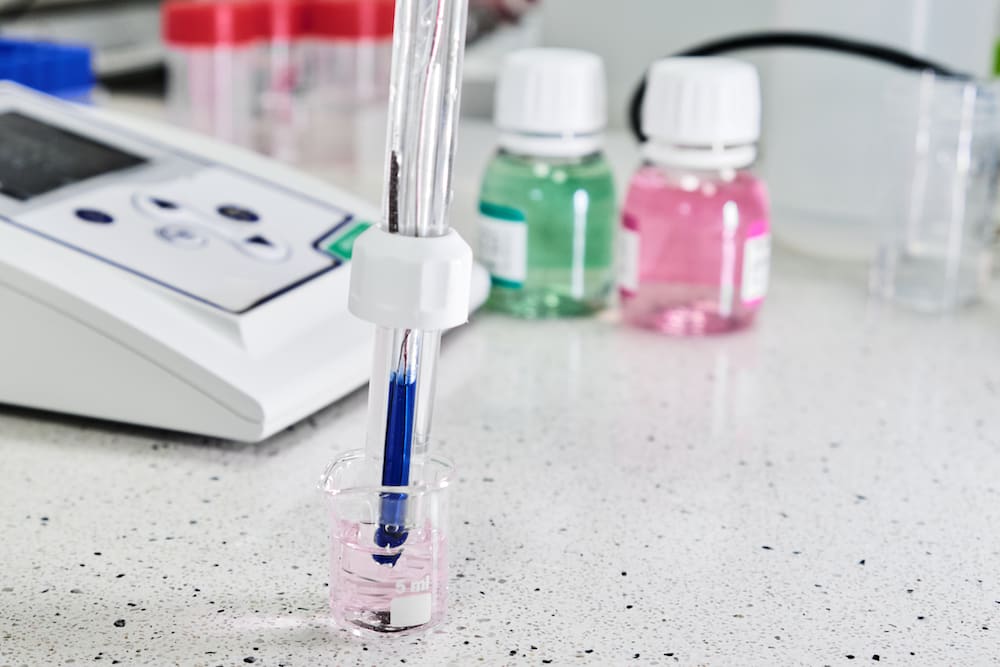
A pH meter is a precision electronic instrument used to measure the acidity or alkalinity of a solution. Its primary function is to quantify the concentration of hydrogen ions, which it expresses as a pH value on a scale from 0 (strongly acidic) to 14 (strongly alkaline), with 7 being neutral.
pH meters are an indispensable tool across applications, such as laboratories, industrial-level environmental testing, HVAC air conditioning, water treatment, food production, and chemical manufacturing. They help in monitoring critical chemical processes, ensuring product quality, and maintaining regulatory compliance.
How Does a pH Meter Work?
The electrodes of pH meters behave much like ion-sensitive types of batteries, producing a voltage that changes based on the hydrogen ion activity across their membranes. In turn, the pH meter measures the electrical potential difference, or voltage, between the two electrodes.
Their specialised sensor systems typically consist of two main parts:
- pH-sensitive electrode: The pH probe is designed to be sensitive to the concentration of hydrogen ions in the solution, generating a tiny voltage that changes with the pH.
- Reference electrode: This reference provides a constant, known voltage to act as a baseline for measurement comparison.
The pH meter's high-impedance circuitry then amplifies this weak millivolt signal and converts it into a corresponding pH value. This value is then displayed on the meter's interface.
In an analogue pH meter, a needle or pointer moves across a graduated scale to show the reading. Meanwhile, readings on digital pH testers are presented as precise numerical values, eliminating the potential for human error in interpreting the reading from a scale.
How to Use a pH Meter
Learn how to operate a pH meter for accurate and reliable measurements in various applications.
1. Calibrate
As the performance of electrodes on pH meters can degrade over time, proper calibration is crucial before use. Therefore, calibrate your meter using standard buffer solutions to ensure it provides precise results. We’ll cover this process in more detail later in this guide.
2. Immerse Probe
Before immersing the probe, wash it thoroughly with deionised water to avoid contaminating the sample. Use a scientific wipe to gently blot it dry, avoiding harsh rubbing that could cause a static charge. Once prepared, the probe should be fully submerged in the solution to be measured without touching the container's sides.
3. Wait for Stable Reading
After immersing the probe, leave the electrode in the solution for one to two minutes to ensure an accurate reading can take place. A digital pH meter will show a stable number on the display, while an analogue meter's needle will stop moving.
4. Record the Value
Once the reading has stabilised, you can record the value. For added accuracy, it's a good practice to take a second reading to confirm the result.
How to Use a pH Meter for Water
pH meters are widely used to test the acidity or alkalinity of water sources, such as drinking water, river water, and wastewater. This helps to ensure water quality, environmental safety, and regulatory compliance.
While the process is similar to that of a general pH measurement, here are a few key points to note in the determination of pH using a pH meter for water samples:
- Temperature: As the electrode's response and the sample's pH vary with temperature, many meters feature Automatic Temperature Compensation (ATC) for accuracy. If your meter lacks this, testing the water sample at room temperature is a good practice.
- Contamination prevention: The probe must be thoroughly rinsed with distilled or deionised water before and after each measurement to prevent contamination and maintain accuracy.
Calibration
Calibration is the process of adjusting your pH meter to known standards, ensuring accurate readings. This process is vital to compensate for the drifted accuracy in the pH meter’s electrodes over time.
pH meters should be calibrated frequently, anywhere from daily to once a month. However, for critical measurements, it’s recommended to calibrate before each use.
There are two common calibration options:
- Single-point: This is a simple calibration using a single buffer solution, typically at pH 7.00. This method is suitable for basic applications with minimal pH variation.
- Multi-point: This involves calibrating with at least two different buffer solutions (such as pH 4.00 and 7.00). It ensures greater accuracy over a wider measurement range.
Here’s how to calibrate a pH meter before using it to measure pH:
- Prepare the buffer solutions, which are typically at standard pH levels of 4.00, 7.00, or 10.00.
- Turn on the pH meter.
- Rinse the probe with distilled water and gently blot it dry with a scientific wipe.
- Immerse the probe in the pH 7.00 solution and let the reading stabilise. If needed, adjust the meter to read exactly 7.00.
- For multi-point calibrations, rinse and repeat the process on the other buffer solutions, adjusting the meter as necessary.
Maintenance
Proper maintenance and storage practices are crucial for the longevity and accuracy of a pH meter’s electrode:
- Rinse with distilled or deionised water: This should be done before and after each use to prevent cross-contamination between samples.
- Use a specialised storage solution: The electrode should be kept moist in a proper storage solution to prevent it from drying out. This helps to avoid damage and inaccurate readings.
- Clean using an electrode solution: Periodically remove residue from the probe using an electrode cleaning solution to ensure it remains responsive.
Common Mistakes to Avoid
- Rinsing with tap water: This should be avoided, as tap water can contain minerals and impurities that interfere with the electrode and affect readings.
- Drying the electrode: Never wipe the electrode with a cloth. This can create a static charge that affects readings as well as damage the sensitive glass membrane.
- Using expired buffers: Always use fresh, unexpired buffer solutions for calibration, as expired buffers can lead to inaccurate calibration and compromised readings.
Types of pH Meters and their Applications
Benchtop pH Meters
Benchtop pH meters are large, stable instruments providing the highest precision, ideal for laboratory and research applications. They often include multi-parameter measurement and data logging capabilities.
For example, a quality control lab in a food processing plant might use a benchtop meter to ensure product consistency and safety.
Portable or Handheld pH Meters
Portable pH meters are compact, battery-powered devices built for use in the field. Their rugged, often waterproof design is advantageous for technicians performing on-site analysis.
For instance, handheld pH meters are used by environmental technicians to test the water quality in rivers and other waterways.
Pen-Style pH Meters
A portable and inexpensive option, pen-style pH meters are all-in-one devices that are perfect for quick, on-the-spot pH checks in small containers or for fieldwork. While less precise than larger meters, they are well-suited for testing the pH of pools, aquariums, and drinking water.
Industrial or Online pH Meters
Industrial pH meters are permanently installed in pipelines or tanks for continuous, real-time monitoring, such as in wastewater treatment plants. These robust sensors can withstand high temperatures and pressures, enabling automated process control and regulatory compliance.
Analogue pH Meters
Analogue pH meters are traditional meters that use a needle display to show readings. They are a simple and robust option, though less accurate than digital models. Their main advantage is that they allow for observations of rapid fluctuations in a reading, making them popular for basic educational experiments in school laboratories.