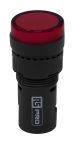
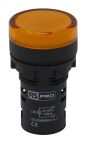
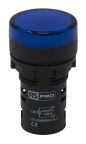
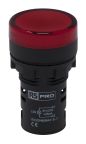
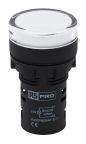
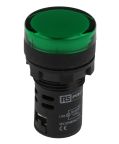
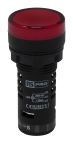
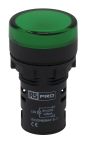
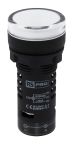
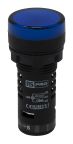
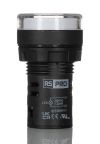
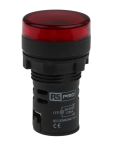
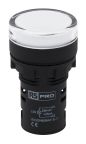
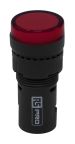
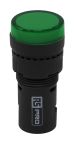
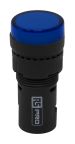
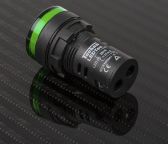
Pilot Lights
Pilot lights (also known as power lamps or power indicator lights) are used to provide visual indication of the operational status of a machine, circuit, or industrial process. They typically signal conditions such as power on/off, running, fault, or standby states and may do so using different colours (for example, red, green, or amber) or illumination modes such as steady or flashing light. Pilot lamp LEDs are commonly mounted on machines or accessible control panels so operators can quickly identify system status.
Pilot lights may also be specified for use in hazardous or harsh environments when constructed from suitable materials and certified to the appropriate ingress protection (IP) ratings or hazardous area standards. Depending on the model and certification, some pilot lights are suitable for installation in environments exposed to dust, moisture, or explosive atmospheres.
Pilot lights can be replaced and are available in various shapes, colours, and sizes and are compatible with various voltages. LED pilot lights generally offer long service life, often rated for tens of thousands of operating hours under normal conditions. Meanwhile, modular industrial pilot lights consist of a lens or operator, a light source module, and a mounting or terminal block, allowing compatibility within specific manufacturer control system ranges.
Main Types of Power Indicator Lights
LED Indicator Lights
An LED pilot light is the most common choice for modern industrial applications due to its exceptionally long operational life, low power consumption, and high resistance to vibration and shock. These are typically used as a switch board indicator light because they consume very little energy and generate minimal heat, making them ideal for high-density control panels. Engineers prefer the LED pilot lamps for critical status monitoring as it maintains high visibility even in brightly lit environments.
Incandescent Indicator Lights
Incandescent versions are traditional pilot lights that use a filament to produce light, often providing a warmer glow that some technicians find easier on the eyes. They are usually used in legacy systems or in specific applications where the electrical circuit requires a resistive load to function correctly. However, they are less common in new installations compared to an industrial indicator light using LED technology due to their shorter lifespan and higher heat output.
Neon Indicator Lights
Neon pilot lights are frequently employed in high-voltage applications, such as mains-powered equipment and heavy-duty industrial machinery. These are chosen when a power indicator needs to be connected directly to an AC supply without the need for a complex transformer or step-down circuit. They are highly reliable for basic "power on" signalling but offer limited colour options compared to other pilot light indicator types.
Fibre Optic Indicator Lights
Fibre optic systems are used to remote-mount a pilot lamp away from the actual light source, often to protect the electrical components from hazardous or high-interference environments. This type of industrial indicator light is ideal for explosive atmospheres or areas with high electromagnetic interference (EMI) where electrical signals could be compromised. By using fibre optics, the power indicator light can be safely displayed on a remote operator station.
How Pilot Lights Work
A pilot indicator light operates by completing an electrical circuit that activates a light source, providing an immediate visual confirmation of a specific machine state or power status. The basic components include the internal light source (such as an LED or filament), the terminal connections, and a coloured lens used to convey different meanings, such as "Running," “Stopped,” or "Fault."
When a power indicator receives a signal from the control system, current flows through the lamp, illuminating the lens to alert the operator. This simple but effective mechanism ensures that personnel can monitor complex arrays at a glance, improving both safety and operational efficiency.
Selecting Pilot Lights for Your Application
Choosing the appropriate industrial indicator light requires an assessment of your electrical system's requirements and the specific environment where the panel will be situated.
- Match the Voltage Rating: Ensure the power indicator light is compatible with your control circuit, whether it requires 12V DC, 24V AC/DC, or 110V/230V AC mains power, to prevent premature failure or unsafe operation.
- Consider Your Mounting Measurements: Select a pilot lamp size that fits your existing panel cutouts, with 16mm, 22mm, and 30mm being the most common industrial standards used in Malaysia.
- Evaluate Environmental Protection: For washdown areas or dusty environments, choose an LED pilot light with an IP65 or IP67 rating to prevent moisture ingress.
- Select the Appropriate Lens Colour: Use industry-standard colour coding, such as red for emergency stops, green for normal operation, and amber for warnings, to ensure clear communication.
Advantages of Power Indicator Lights
There are many reasons to install a pilot lamp. They are a small detail that can greatly improve operational efficiency and safety.
- Instant Visual Feedback: A pilot light indicator provides immediate confirmation of equipment status, allowing operators to see if a machine is running, idling, or stopped from across the factory floor.
- Prevention of Operational Errors: By clearly signalling power on/off states, a switch board indicator light helps prevent technicians from attempting maintenance on live circuits or failing to start essential processes.
- Standardised Status Identification: Because pilot lights are available in various colours, they allow for a universal language of machine health that is easy for all staff to identify at a glance.
- Energy Efficiency and Durability: Modern pilot lamp LED types consume minimal power and are highly resistant to the vibration and shock common in heavy industrial environments.
- Enhanced Safety Protocols: An industrial indicator light serves as a vital safety feature by alerting users to potential hazards, malfunctions, or "trip" conditions before they escalate.
- Seamless System Integration: These components can be easily wired into automated control systems, providing real-time monitoring and allowing for quick diagnostics during a system failure.
Applications for Pilot Lights
Pilot lights are used across a wide range of industrial and commercial applications, either as standalone indicators or integrated into switches. They can be found in a number of places including the following:
- Automotive: Within vehicles, a pilot lamp is used to signal the activation of various systems such as turn signals, high beams, or engine warning alerts.
- Automatic Equipment: In factory automation, an industrial indicator light provides real-time feedback on the cycle status of robotic arms and conveyor systems.
- Telephones: Commercial telecommunication systems often use a small power indicator light to show line activity, "do not disturb" modes, or waiting voicemails.
- Condition Panels: Large-scale control rooms rely on a switch board indicator light array to monitor the health and status of remote power grids or water treatment facilities.
- Dashboard Lights: On heavy machinery and plant equipment, pilot lights alert operators to critical levels such as oil pressure, battery health, or overheating.
- Commercial Buildings: In building management systems, a power indicator is used to show the status of HVAC systems, lift operations, and emergency lighting circuits.
Supplier and Distributor of Pilot Lights in Malaysia
RS Malaysia is a premier supplier and distributor of high-quality pilot lights, offering a vast range of signalling solutions to support the nation's manufacturing and infrastructure sectors. We carry an extensive inventory of pilot lamp LED modules and traditional power indicator units from world-leading brands such as Schneider Electric, Eaton, and Siemens.
Whether you require a single switch board indicator light for a repair or a complete set of industrial indicator light components for a new panel build, we provide the local stock and technical expertise you need. In addition to our pilot lights, RS Malaysia also stocks complementary products including push buttons, selector switches, and emergency stop buttons to complete your control interface.
For more information on our delivery options and fees, please visit our delivery page.