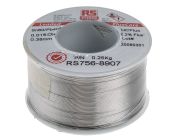
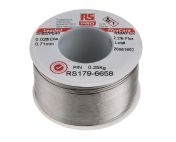
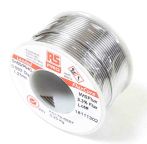
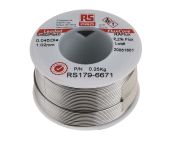
Solder
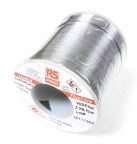
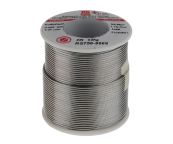
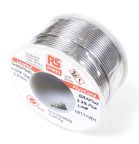
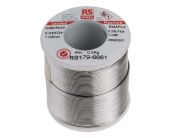
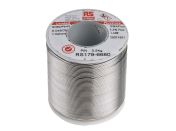
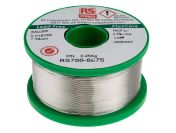
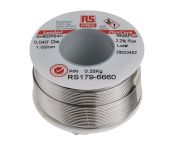
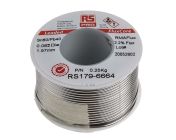
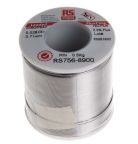
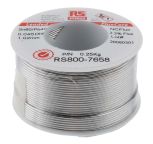
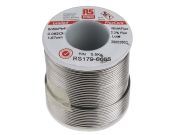
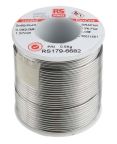
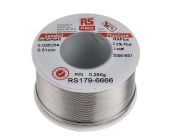
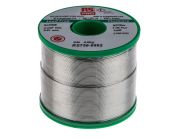
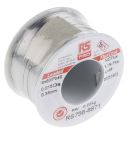
Solder, also known as solder wire, is a fusible metal alloy with a low melting point used to permanently join two higher-melting-point metals. This process is common in electronics for printed circuit boards (PCBs) and components, jewellery manufacturing, and plumbing. RS offers a diverse range of solder wire products from leading manufacturers, available in various wire diameters (from 0.23mm to 7mm) and lead content (0% to 70%), catering to diverse applications.
What is Solder Made Of?
Solder alloys vary based on manufacturer and application:
- Lead-Based Solders: Traditionally, solders are composed of roughly 60% tin and 40% lead, such as 63/37 or 60/40 compositions, prized for their low melting points (~180-190°C) and ease of use. Lead enhances tensile strength and flow characteristics and prevents tin whiskers. However, due to environmental and health concerns, lead solder is restricted in many applications.
- Lead-Free Solders: These alloys contain tin combined with metals like copper, silver, bismuth, antimony, and zinc. Lead-free solders generally have a higher melting point (around 217°C for common tin-copper types) and may require higher soldering temperatures and precise techniques. SAC (Tin-Silver-Copper) alloys are notable for excellent mechanical strength and durability.
What is Flux?
Flux is a chemical agent included in solder (flux core) designed to prevent oxidation of metals during soldering. It reduces metal oxides and seals out air from the joint, enabling strong electrical and mechanical joints. There are two main types of flux:
- Rosin (Passive) Flux: A natural pine resin-based flux, non-corrosive and suitable for electronics, creating residue that is simple to clean.
- Acid (Active) Flux: Contains acids like zinc chloride, ideal for plumbing and metal repair but corrosive and unsuitable for electronics.
What Forms of Solder Are There?
Solder is available in various forms to suit different applications and joints. The most common form of solder is solder wire, which comes in a range of wire diameters to meet specific application needs. Solder granules are small pellets ideal for soldering machines and tinning crucibles, and they are also commonly used in jewellery making. Solder paste is a sticky substance used primarily for PCBs and connecting surface-mount electronic components. It is applied to the board by printing or painting, making it suitable for automated soldering processes.
How to Choose the Right Solder for Your Project
Selecting the correct solder is crucial for achieving a strong and reliable joint. Here are the key factors to consider:
- Compatibility and Heat Sensitivity: Choose solder compatible with your project materials and their heat sensitivity.
- Composition: Decide between lead-free and lead-based solder. Lead-free solder wire is a safer choice for the environment, while lead-based solder is easier to work with.
- Melting Temperature: Ensure the solder's melting temperature matches the requirements of your application.
- Flux Core: Pick a solder with the right flux core. Rosin-core is suitable for electronics, while acid-core is best for plumbing and other metal mending.
- Wire Thickness: Select a suitable solder wire thickness for the size of your components or wires.
- Mechanical Strength: Consider the required mechanical strength and electrical conductivity.
Types of Solder: Lead vs Lead-Free
The choice between lead and lead-free solder wire depends on the application, required properties, and environmental considerations.
- Composition: Lead-based solder typically has a composition of 60% tin and 40% lead. Lead-free solder wire may contain tin, copper, silver, and other materials.
- Melting Point: Lead-free solder typically has a higher melting point than lead-based solder, which can affect the soldering process.
- Joint Strength: Lead-free solder joints are often stronger and more durable than lead-based solder joints.
- Wetting Ability: Lead-based solder has better wetting ability, making it easier to work with and resulting in smoother joints.
- Environmental Impact: Lead-free solder wire is an environmentally safer option because it does not contain lead, a hazardous material.
- Health Hazard: Lead-based solder poses a health hazard due to lead fumes and contamination.
- Corrosion Resistance: The alloys used in lead-free solder can offer greater corrosion resistance.
- Electrical Conductivity: Both lead and lead-free solders provide good electrical conductivity.
Safety Precautions When Soldering
Safety is paramount when soldering. Here are some key precautions to follow:
- Ventilation: Always work in a well-ventilated area or use a fume extractor to avoid inhaling toxic fumes from solder and flux.
- PPE: Wear personal protective equipment, including safety glasses, heat-resistant work gloves, and long-sleeved clothing to protect against burns and splashes.
- Avoid Contact: Never touch the soldering iron tip or heated solder directly to avoid serious burns.
- Soldering Stand: Always place the soldering iron in its stand when not in use, and never leave it unattended when hot.
- Lead-Free: Use lead-free solder wire whenever possible to reduce exposure to harmful lead fumes and contamination.
- Hygiene: Avoid eating, drinking, or smoking near the soldering area to prevent the ingestion of toxic substances.
- Cleanliness: Keep soldering work surfaces clean, dry, and free from flammable materials to reduce fire risk.
- Electrical Safety: Ensure electrical safety by inspecting soldering equipment for damaged cords and using grounded outlets.
How to Store Solder Properly
Proper storage of solder is crucial for maintaining its quality and ensuring a strong joint. Here are some tips for storing solder correctly:
- Environment: Store solder wire and bars in a cool, dry, and non-corrosive environment to minimise oxidation.
- Protection: Keep solder away from direct sunlight and moisture to prevent degradation.
- Sealed Containers: Store solder in sealed containers or wrap it when not in use to reduce exposure to air and maintain its quality.
- FIFO: Use a first-in, first-out (FIFO) system to ensure older stock is used first.
- Handling: Avoid excessive handling or shaking to prevent surface damage.
- Dull Surface: Note that a dull or slightly yellow surface on solder bars is normal and does not affect functionality.
Industrial Applications of Solder
Solder is an indispensable material in a variety of industries and applications.
- Electronics Industry: Solder is widely used in the electronics industry for connecting components to PCBs and for repairing electronic devices.
- Automotive Industry: In the automotive industry, solder is used for connecting electrical components and wiring harnesses and for repairing radiators and fuel lines.
- Jewellery Making: Solder is used in jewellery making to join metal pieces and create intricate designs.
- Plumbing: In plumbing, solder is used to join copper pipes and fittings, creating a secure and leak-proof seal.
- Art and Craft: Solder is used in various art and craft applications, such as stained glass and metal sculpture.
- Industrial Manufacturing: Solder is used in industrial manufacturing for joining metal parts in a wide range of products.
- Telecommunications: In telecommunications, solder is used for connecting cables and components in network infrastructure.
Shop Solder from RS Malaysia
As Malaysia's leading and trusted supplier and distributor, RS offers a comprehensive selection of high-quality solder wires. You'll find a variety of options, including lead-free solder wires, from top brands like Felder Lottechnik, MBO, Multicore, Weller, and RS PRO. Our competitive prices are matched by a seamless online ordering experience and fast, nationwide doorstep delivery. For detailed delivery information and fees, visit our Delivery page.