Threading Tap & Die Sets
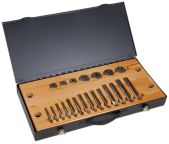
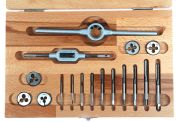
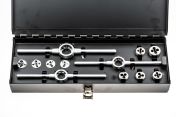
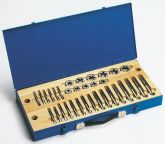
Threading tap and die sets are used to create screw threads, both internal and external. While most sets are cutting tools, some include forming types. Taps are designed to cut internal threads, such as those inside a nut, a process known as tapping. Meanwhile, dies cut or form external threads on rods or bolts, called threading.
Both tools can also be used to clean dirt and debris from their respective products, which is called chasing. However, taps and dies will generally remove some material during use, and so specific tools have been created for the specific purpose of cleaning — these are called chasers. These are made of softer materials so that they do not remove more material from the threads.
How Do Tap and Die Sets Work?
The basic operation involves securing a rod, screw, or pipe in a vice and applying cutting paste or lubricant. The die is placed on the rod and rotated clockwise using a die handle, with each full turn cutting a new external thread. Similarly, taps are used to cut internal threads in pre-drilled holes. Proper use involves steady, controlled turning with periodic backing off to clear chips and prevent jamming.
When Would I Use a Tap and Die Set?
Tap and die sets are typically used in the electrical and industrial sectors, as well as servicing and automotive workshops. They are used for creating new threads, repairing damaged threads, and ensuring thread integrity in components and assemblies.
How to Choose the Right Tap and Die Set for Your Project
Selecting the right tap and die set is crucial for ensuring the quality and integrity of your threaded components. Here are the key considerations when selecting a tap and die set:
- Assess Material Compatibility: Identify the material of the workpiece to select a compatible tap and die material.
- Consider Thread Type and Size: Determine the required thread type (e.g., metric, imperial, fine, or coarse) and specific sizes needed for your application.
- Select Taps for Their Purpose: Choose the appropriate tap types (e.g., taper, plug, or bottoming) based on the depth and accessibility of the hole you are threading.
- Choose Dies for External Threading: Select dies appropriate for external threading, including solid or adjustable dies for different applications. A thread die set should suit your precision needs.
- Look for Kits with Essential Accessories: Prioritise a comprehensive tapping set that includes essential accessories like tap wrenches, die stocks, and screw pitch gauges.
- Prioritise Reputable Brands: Opt for tap and die sets from reputable brands known for their high-quality manufacturing and durability.
- Factor in Usage Frequency: Select a kit material (e.g., HSS) that aligns with your projected usage frequency, whether for occasional home use or heavy industrial use.
- Check for Ergonomics: Look for tap and die sets with ergonomic and easy-to-use tool holders to reduce fatigue during prolonged tasks.
- Consider Safety Features: Ensure the thread tap set includes features that enhance safe use, such as non-slip grips and robust casing.
Maintenance and Care Tips for Tap and Die Tools
Proper maintenance is essential to ensure your tap and die tools remain sharp, accurate, and ready for work, thereby prolonging their service life.
- Clean After Each Use: Clean the thread tap and die set thoroughly after each use using a soft brush or cloth to remove dirt, metal shavings, and debris.
- Apply Appropriate Lubricant: Apply the appropriate lubricant or cutting oil during use to reduce friction and heat and to prolong tool life.
- Follow Proper Storage Rules: Store tap and die sets in a dry place, preferably in a dedicated case or toolbox, to prevent rust and corrosion. Keep tools organised and labelled to avoid mixing sizes and types.
- Inspect Regularly: Routinely check tools for damage such as chips, cracks, or dull edges; replace worn or damaged tools promptly.
- Avoid Harsh Chemicals: Refrain from using harsh chemicals during the cleaning process, as these substances can damage the metal surfaces.
- Use Proper Sharpening Techniques: Use proper sharpening tools and techniques only if experienced; otherwise, seek professional sharpening services.
Safety Precautions When Using Tap and Die Sets
Safety should always be the priority when working with threading tools. Always follow these precautions to prevent injury and damage to the tools:
- Always Wear Protective Gear: Wear safety goggles to protect your eyes from metal shavings. Use gloves to protect your hands from sharp edges and metal splinters.
- Secure the Workpiece: Secure the workpiece firmly in a vice or clamp; never hold it by hand, as it could rotate unexpectedly.
- Use the Correct Size: Use the correct size thread tap set or thread die set for the threading job; forcing the wrong size will lead to tool breakage.
- Use Cutting Oil: Apply cutting oil or lubricant to the cutting area to reduce friction and prevent tool breakage during the threading process.
- Turn Slowly and Steadily: Rotate taps and dies slowly and steadily; avoid forcing or excessive pressure. Back off (reverse) the tap regularly to clear chips and avoid jamming.
- Maintain a Clean Workspace: Keep your workspace clean and well-lit to prevent accidents and ensure you can see the work clearly.
Materials Suitable for Tap and Die Sets
The material used to manufacture threading tools is a primary factor determining their performance, durability, and cost. Here are the common materials used to make these tools:
- High-Speed Steel (HSS): Durable, heat-resistant, suitable for tough materials and heavy-duty use.
- Carbon Steel: Affordable, good for softer metals and plastics, dulls faster than HSS.
- Alloy Steel: Balanced strength and flexibility, versatile for various applications.
- Cobalt Steel: Enhanced toughness and wear resistance, ideal for hardened materials.
- Carbide-Tipped: Extremely hard and wear-resistant, used for precision and high-volume work.
- Titanium Nitride (TiN) Coated: Coated to extend tap and die lifespan by reducing friction and heat.
Common Applications of Tap and Die Sets in Industries
Tap and die sets are indispensable across many industries for creating, restoring, and maintaining threads, such as:
- Automotive: Essential for engine repair and maintenance, tap and die sets fix stripped threads in engine blocks, chassis, and suspension components, ensuring component integrity.
- Industrial Machinery: Used in the maintenance of heavy industrial equipment to repair or re-thread shafts and bolt holes, minimising downtime and extending machine life.
- Electrical Equipment Assembly: Technicians use thread tap and die sets for the precise creation and repair of threaded holes in metal enclosures and cabinets for mounting components.
- Aerospace Manufacturing: As aerospace manufacturing relies heavily on component integrity, tap and die tools are essential for creating and repairing precise threads on aircraft components, where high precision and material strength are paramount for safety.
- Plumbing: Plumbers use die set tools to create new threads on metal pipes, ensuring tight, leak-free connections for fluid transport systems.
- Metal Fabrication and Welding: Fabricators use tap and die tools to create internal and external threads on materials, often required for joining components after cutting or welding. This precision threading is critical for ensuring that assembled metal structures are robust and secure.
- Custom Manufacturing and Prototyping: Tap and die sets are used extensively in workshops for creating custom components and prototype parts that require specific threading. This can range from small, intricate fixings for bespoke electronics to large, heavy-duty bolts for custom machine fabrication.
- Agricultural Machinery: Today, taps and dies are essential for the maintenance of modern farming equipment, fixing damaged threads on machinery components subject to heavy use and harsh environments.
- Construction: In construction, tap and die sets are often used for equipment repair on site, ensuring fasteners on scaffolding, heavy plant, and temporary structures are correctly threaded and secured. This on-the-spot thread restoration is crucial for maintaining safety standards and preventing delays to project timelines.
- Marine and Shipbuilding Industries: Tap and die sets are vital for creating and maintaining robust threads on components exposed to corrosive environments, such as ship hulls and engine rooms.
Shop Tap and Die Sets from RS Malaysia
RS is your trusted source for tap and die sets in Malaysia. As a leading manufacturer, supplier, and distributor, we offer a wide selection of high-quality tap and die tools from top brands like Ega-Master, SAM, and RS PRO. Our prices also cater to diverse budgets.
Buy your tap and die sets online, along with other essential hand tools like wire cutters and pipe cutters to complete your toolkit. We offer competitive prices and a seamless online ordering experience. Enjoy fast, nationwide doorstep delivery. For detailed delivery information and fees, visit our Delivery page.
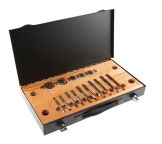
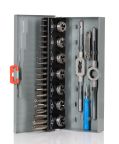
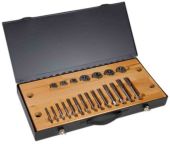
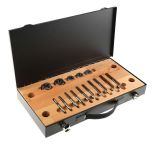
Related links
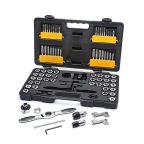
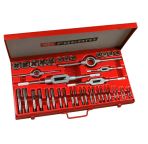
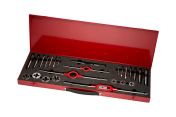
- RS PRO 54-Piece HSS Tap & Die Set M3 - M20 Dies
- RS PRO 12-Piece HSS Thread Tap & Die Set M2 - M6 Dies
- RS PRO 32-Piece HSS Tap & Die Set M3 - M12 Dies
- EVENTUS 16-Piece High Speed Steel Thread Tap & Die Set M3 - M12 Dies
- RS PRO 20-Piece HSS Thread Tap & Die Set M3 - M10 Dies
- Dormer 18-Piece HSS Thread Tap & Die Set 1/4 in UNC - 1/2 inch Dies
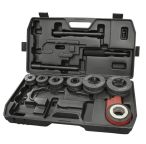
- Ega-Master 4-Piece Malleable Cast Iron Thread Tap & Die Set 1/4 in - 4 inch Dies
- Ega-Master 4-Piece Cast Iron Thread Tap & Die Set 1/4 in - 2 inch Dies