Anti Static Storage Boxes
Anti-static storage boxes, or ESD boxes, are essential equipment for safely transporting or storing electronics sensitive to damage caused by electrostatic discharge (ESD). An ESD box prevents the flow of electricity between charged objects, protecting components like PCBs or other semiconductor devices during handling and storage. They are typically made from materials with defined electrical properties (conductive, static-dissipative, or shielding) that either conduct charges safely to ground or bleed them away in a controlled manner rather than allowing sudden discharges.
RS Malaysia offers a wide range of high-quality anti-static containers, including conductive ESD bins and durable ESD storage boxes. Our comprehensive selection ensures you have the right ESD storage solution for all your workshop, laboratory, and cleanroom requirements, safeguarding your critical electronic components effectively.
Features and Benefits of Anti-Static Storage Bins and Boxes
Anti-static storage boxes offer vital features engineered to secure sensitive electronics throughout storage and transport efficiently.
- ESD-Safe Materials: Typically made from conductive polypropylene, ESD box materials provide permanent static protection, safely dissipating electrostatic charge away from components.
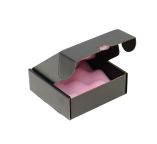
- Protective Inserts: Some ESD box models include anti-static foam inserts, which offer extra cushioning and protection for delicate electrical devices. In turn, they minimise physical and electrical damage during transit.
- Design Variations: Available in open, stackable, or closed protective styles, the design flexibility of ESD storage boxes ensures suitability for fixed shelving and component transit.
- Organisation: ESD divider boxes and index card slots allow for systematic component storage. This streamlines inventory management and retrieval processes within a workspace.
- Durability: Anti-static storage boxes are designed with robust construction, ensuring a convenient, cost-effective, and long-lasting solution for storing sensitive parts.
What Are the Different Types of Anti-Static Containers?
Anti-static containers can be classified into various broad categories:
By Material and Function
ESD boxes are available in various materials, affecting how the containers interact with and manage electrical charges.
- Conductive: These containers are made with materials like carbon-loaded polypropylene, which quickly conducts charges away to ground, preventing dangerous buildup. They are ideal for the safe movement of non-sensitive components when used within an established ESD protected area (EPA).
- Static-Dissipative: Materials like pink polyethylene control charge flow slowly, safely dissipating it over time. They are best for protecting delicate electronic assemblies and components requiring precise, careful handling.
- Shielding: Designed to protect highly sensitive items, anti-static containers may feature an internal conductive layer, such as metallised film, to block external ESD fields. This is essential for storing and transporting fragile PCBs outside an EPA.
By Design and Structure
The physical design of an ESD container also affects workspace efficiency and handling methods.
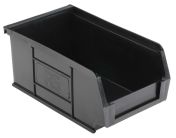
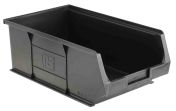
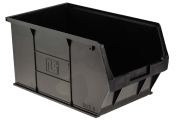
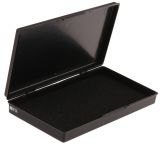
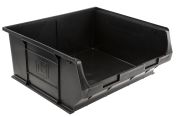
- Open Boxes: These containers provide instant access to components on shelving or workstations. They are typically used as ESD bins for PCB handling or general component sorting within a localised production area.
- Stackable Boxes: These styles utilise vertical space efficiently without compressing contents below. They are ideal for high-density storage where quick retrieval and space optimisation are necessary.
- Nestable Boxes: When empty, these containers fit inside one another, reducing the required floor space for storage. This makes them a cost-effective choice for returnable shipment programmes.
- Folding or Turnover Boxes: These ESD storage boxes can collapse when not in use, saving space and lowering shipping costs when being returned to the warehouse or supplier empty.
- Boxes with Inserts: These containers include custom foam or plastic divider trays. They are designed to prevent movement and damage, making them perfect for secure transit of varied component sizes.
By Protection Level
The various protection levels of ESD containers also enable them to handle different proximities with sensitive components during storage or transit.
- Intimate: These types of ESD boxes are useful when the packaging comes in direct contact with the component. Examples include specialised bags or trays designed to hold the item immediately before assembly.
- Proximity: As a primary protective enclosure, these ESD containers include sealed boxes or trays. They provide immediate shielding for items during internal handling or short-distance transport between workstations.
- Secondary: This final layer involves the outer protective case or carton used for shipment or long-term warehousing. These ESD storage boxes safeguard the primary ESD container from physical and environmental damage.
How Anti-Static Containers Protect Your Devices
Anti-static containers shield sensitive electronics by controlling and neutralising static electricity, which is the primary cause of ESD damage during handling and storage. Here are ways in which they work:
- Prevent Charge Buildup: The ESD box material is formulated to avoid generating triboelectric charging when components rub against it.
- Dissipate or Conduct Charge: Conductive ESD bins channel static charges away to ground.
- Block: Shielding boxes physically block external electrostatic fields from reaching the contents through a conductive layer.
- Controlled Discharge: Static-dissipative materials slowly bleed off any accumulated charge, preventing sudden sparks.
Comparison: Anti-Static Boxes vs. Regular Storage Boxes
While they are structurally similar to standard storage box bins, anti-static storage boxes differ critically in their fundamental protective function against electrical discharge.
- Purpose: ESD containers protect sensitive electronics from static while regular boxes provide only basic physical containment.
- Material Composition: ESD boxes use conductive or static-dissipative materials with specified surface resistivity ranges. Meanwhile, regular plastic boxes are often insulative and prone to charge build-up.
- Static Protection: An ESD box actively dissipates charge while regular bins often generate static, risking component damage.
- Applications: ESD boxes are mandatory for PCB handling, in contrast to standard bins, which are used only for general, non-sensitive items.
- Cost: Due to the specialised materials used in ESD boxes, these anti-static options are typically higher priced than regular storage bins.
- Industry Standards: Anti-static products must comply with strict international standards. However, regular bins have no such protective mandate.
- Maintenance: ESD boxes may require periodic cleaning and testing to maintain conductivity, but regular boxes need no special upkeep.
Maintenance Tips for Anti-Static Storage Boxes
Regular maintenance is essential to preserve the integrity and functionality of your anti-static containers and ensure maximum component protection.
- Wipe Surfaces: Gently wipe the exterior surfaces using a soft cloth to prevent scratches.
- Clean Gently: Use only non-porous or anti-static cleaners. Avoid using harsh chemicals, bleach, or abrasives.
- Dry Completely: After cleaning, rinse the ESD box thoroughly and ensure it is dried completely before reuse or storage.
- Lubricate: Periodically apply a light oil to hinges and locking mechanisms to ensure smooth operation.
- Inspect: Check for loose parts, such as handles or dividers, and tighten them as needed.
- Keep Away from Contaminants: Protect the anti-static containers from excess moisture and dust, which can compromise ESD properties.
- Test Surface Resistivity: Conduct a surface resistivity test after cleaning to verify the static control features are still intact.
Industrial Applications of Anti-Static Storage Boxes
Anti-static storage boxes are mandatory in several high-tech industries to eliminate static damage during the handling of sensitive components.
- Electronics: ESD boxes are essential for the transport and storage of assembled PCBs and circuit boards within production lines, preventing premature failure caused by static discharge events.
- Semiconductors: In semiconductor manufacturing, anti-static containers are used to handle microchips and integrated circuits during fabrication and testing processes, where even minimal static charge is highly destructive to the components.
- Medical Devices: Diagnostic equipment components, such as complex sensors and circuit boards, rely on ESD containers for secure storage during manufacturing. This ensures their integrity and function before final assembly.
- Automotives: ESD containers are used in the storage of electronic control units (ECUs) and complex sensor arrays required for modern vehicle safety and operating systems.
- Computing: High-value components like RAM modules, graphics cards, and CPUs are usually held in ESD storage boxes during warehousing, repair, and upgrading processes.
- Appliance Manufacturing: Anti-static containers are essential for organising and protecting control panels, touchscreens, and digital displays before final assembly into domestic or commercial white goods.
- Laboratory Sciences: In laboratories, sensitive research instruments and delicate components that rely on precise electronic measurements and controlled environments need to be stored in ESD bins.
- Logistics and Warehousing: Anti-static storage boxes help to minimise static and physical damage risks when shipping high-value electronic components globally.
- Precision Instruments: ESD bins for PCB storage and fine mechanisms are crucial when maintaining and calibrating equipment and advanced measuring tools.
Choosing the Right ESD Bin for Your Needs
Consider the following factors when selecting an ESD container to ensure complete static protection tailored to your components and workflow:
- Material Type: Choose a conductive, dissipative, or shielding material based on component sensitivity and where it will be handled.
- Size and Capacity: Select dimensions that fit your components and storage system without overcrowding the ESD container.
- Closure Design: Opt for sealed designs with handles for secure transit, or open ESD bins for quick access at fixed workstations.
- Industry Certifications: Verify compliance (such as, ANSI/ESD S20.20) to ensure the container meets professional static control standards.
- Inserts: Decide if you need foam or ESD divider box inserts to prevent component movement and accidental short-circuiting.
- Surface Resistivity: Check the resistivity range to confirm the material's function, as this dictates the speed of charge control.
- Application-Specific Needs: Consider factors like cleanroom suitability or required resistance to chemicals and extreme heat during use.
Buy ESD Boxes at RS Malaysia
RS Malaysia is a trusted supplier and distributor of essential ESD storage boxes and anti-static containers. Our high-quality products are sourced from reputable brands like Licefa, EUROSTAT, Treston, and Raaco, offering reliable options to safeguard your electronics.
Beyond anti-static boxes, we also provide other vital ESD control options, including ESD packaging bags and anti-static mats, to meet all your electronic storage needs.
Explore our user-friendly online site for the full range and have your desired items shipped directly to your door. With our flexible and swift delivery options, we ensure the timely availability of your goods at your convenience.
Find out more about our delivery times and fees on our delivery information page.


Popular Searches
Related links
- RS PRO ESD-Safe Bins & Boxes
- Polypropylene ESD-Safe Box 400mm (L) 170mm (H)
- Electrostatic Properties Aluminium ESD Bin 35mm (L) 1.105m (W) 75mm (H)
- Anti Static Mats
- Anti Static Brushes
- Anti-Static Plastic ESD-Safe Box
- Conductive Polypropylene ESD Box 400mm (L) 300mm (W) 212mm (H)
- Polypropylene ESD-Safe Cabinet 254mm (L) 203mm (H)