Platform Trolleys
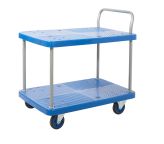
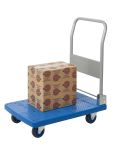
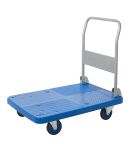
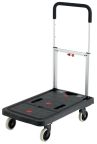
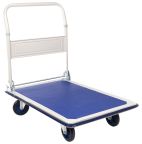
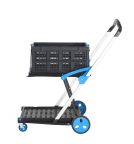
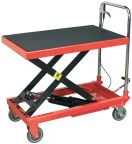
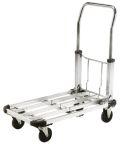
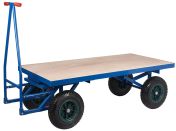
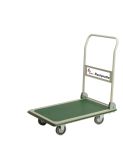
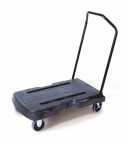
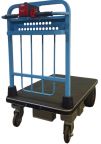
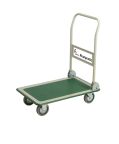
Platform trolleys, also known as platform trucks, are versatile wheeled devices designed for transporting heavy or bulky items such as boxes or packages across short or long distances within workplaces. Essentially a platform hand trolley, they typically feature a flat loading platform mounted on four wheels and a handle that facilitates easy manoeuvring via pushing or pulling. By minimising manual lifting, platform truck trolleys significantly enhance operational efficiency and reduce worker fatigue in warehouses, retail, manufacturing, and other commercial environments.
How Do They Work?
The core mechanism of a platform trolley relies on its undercarriage and wheel assembly, making it highly portable. The flat platform is supported by casters — typically two fixed and two swivel wheels — which distribute the load evenly and facilitate smooth directional changes. Operation involves manually loading the items onto the platform and pushing the trolley, allowing the wheels to bear the weight. This design enables the operator to easily move the maximum weight of items to a destination, reducing physical strain and improving overall productivity compared to manual carrying.
Features and Benefits
Platform trolleys offer significant advantages for streamlining material handling in any workspace.
- Increased Efficiency: Using a platform truck speeds up tasks like moving materials, saving time and money in your business operations.
- Safety Enhancement: Trolleys significantly reduce the need for manual lifting, lowering the risk of back injuries and workplace accidents.
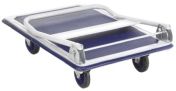
- Storage Convenience: Many models feature the added capability of being foldable, with the handle lying flat, making them easy to store when not in use.
- Heavy Load Capacity: A heavy-duty platform trolley can carry loads in excess of 700 kg, and even more, accommodating bulky industrial materials.
- Ease of Manoeuvre: The multi-caster design makes the platform hand trolley easy to steer and push, even under full load.
- Cost-Effective: As a long-term investment, these trolleys are inexpensive to acquire and maintain.
- Simple Maintenance: Platform trolleys are simple to maintain and repair, contributing to minimal downtime.
How to Choose the Right Platform Trolley for Your Needs
Selecting the appropriate platform trolley is vital for safety and efficiency in your operations.
- Load Capacity and Weight: Assess the maximum weight and size of items to be moved, ensuring the trolley's capacity meets your heavy-duty requirements.
- Platform Size and Surface: Determine the appropriate size to safely accommodate your loads.
- Trolley Material: Evaluate the material (steel, aluminium, or plastic) based on durability, environment, and weight. A steel platform trolley offers high strength, while aluminium is lighter.
- Wheel Type and Mobility: Choose wheel type based on your working environment. Hard rubber is good for smooth floors, while pneumatic tyres are better for uneven outdoor surfaces.
- Safety Features: Look for essential features like brakes and non-slip deck surfaces to enhance user safety.
- Caster Configuration: Select between fixed, swivel, and locking casters based on manoeuvrability needs; swivel casters allow sharp turns, while locking casters secure the trolley when stationary.
- Ergonomics and Handling: Consider handle type and height for user comfort and ease of handling, especially for frequent use.
- Durability and Intensity: Analyse the frequency and intensity of use to decide on the required durability; a lightweight folding platform trolley may suffice for occasional office use, but manufacturing requires a robust model.
Safety Tips When Using Platform Trolleys
Using platform trucks safely requires adherence to simple operational guidelines to prevent accidents and injuries.
- Pre-Use Check: Always check the trolley’s condition before use, including wheels, handles, and brakes, for wear or damage.
- Balance the Load: Ensure the load is stable, well-balanced, and kept within the trolley's rated weight capacity.
- Secure Loads: Secure loads properly using straps or shrink-wrap to prevent shifting or falling during movement.
- Suitable Surfaces: Use trolleys designed for the surface type and strictly avoid uneven or wet, slippery floors.
- Push, Don't Pull: Push the trolley rather than pull it to maintain better control and reduce the risk of strain injuries.
- Avoid Overloading: Never overload beyond the manufacturer’s rated capacity to prevent frame damage or tipping.
- Maintain Visibility: Do not stack loads so high that they obstruct the operator’s view ahead.
- Wear PPE: Wear appropriate personal protective equipment, such as gloves and safety shoes, to protect hands and feet.
- Provide Training: Ensure all users are trained on proper handling techniques and safe operating procedures.
- Regular Maintenance: Regularly inspect and maintain the trolley to ensure safe operation.
Common Mistakes to Avoid When Using Platform Trolleys
Avoiding common handling errors is vital for extending the lifespan of your platform hand trolley and maintaining a safe workplace.
- Overloading: Exceeding the trolley's weight capacity risks frame failure, wheel damage, and tipping.
- Neglecting Inspections: Failing to perform regular pre-use checks can lead to accidents from faulty brakes or worn wheels.
- Improper Loading: Loading items unevenly causes imbalance, making the trolley difficult to control and increasing the risk of tipping.
- Unsuitable Surfaces: Using the trolley on uneven, slippery, or unsuitable surfaces can result in loss of control or component damage.
- Pulling Instead of Pushing: Pulling compromises control and increases the risk of back injury; always push the trolley.
- Ignoring Hazards: Failing to account for environmental hazards such as slopes, tight obstacles, or thresholds can lead to instability.
- Poor Training: Lack of proper training leads to incorrect handling techniques, accelerating wear and increasing accident risk.
- Obstructed View: Stacking loads too high dangerously obstructs the operator's view, leading to collisions.
- Unsecured Load: Failing to secure the load properly means items can shift or fall off during movement, causing damage or injury.
Maintenance and Care for Platform Trolleys
Regular maintenance significantly extends the lifespan of your platform truck and guarantees safe operation.
- Regular Inspections: Frequently check all critical points — wheels, brakes, handles, and the main frame — for signs of wear, cracks, or damage.
- Routine Cleaning: Routinely remove dirt, dust, and debris from wheels, axles, and platform surfaces to ensure smooth, low-friction operation.
- Lubrication: Apply appropriate lubricants to wheels, axles, and handle joints regularly to reduce friction and minimise component wear.
- Tighten Parts: Periodically check and tighten all bolts, nuts, and screws to maintain the structural integrity and stability of the frame.
- Replace Components: Promptly swap out any damaged or worn wheels, brakes, or other vital parts to avoid safety risks and further equipment damage.
- Proper Storage: Store trolleys in dry, sheltered areas to protect the steel or plastic components from rust and environmental degradation.
- Capacity Limits: Strictly follow manufacturer instructions for maximum load capacity to prevent frame fatigue and damage.
Features to Look for in Heavy-Duty Platform Trolleys
When demanding applications require extreme performance, choosing a dedicated heavy-duty platform trolley is essential.
- Durable Construction: Look for frames made from reinforced steel or thick-gauge aluminium for maximum structural integrity under stress.
- High Load Capacity: Ensure the trolley is certified to handle the required weight, often featuring capacities well over 500 kg.
- Heavy-Duty Casters: Robust, large-diameter casters with durable rubber or polyurethane wheels are required to handle weight and traverse uneven industrial floors smoothly.
- Platform Size and Height: The platform must be appropriately sized to handle large loads while maintaining a stable, safe height for loading and unloading.
- Safety Features: Enhanced braking systems (foot brakes or dead man's brakes) are critical for securing exceptionally heavy loads.
- Overall Stability: Look for a wide wheelbase and reinforced joints that guarantee stability, especially when moving loads across turns or slopes.
Industrial Applications of Platform Trolleys
The versatility and durability of platform trucks make them indispensable across the industrial and commercial supply chain.
- Warehousing: Used for general material transport, order picking, and moving bulk items from receiving to storage areas.
- Retail: Essential for transporting large quantities of merchandise from storage rooms to the main sales floor and managing stock deliveries.
- Hospitality: Utilised in hotels and restaurants for moving linen, food supplies, luggage, and cleaning equipment efficiently.
- Healthcare: Crucial for transporting medical supplies, equipment, and sometimes waste within hospitals and clinics.
- Industrial Manufacturing: Moving tools, components, sub-assemblies, and finished goods between different production cells and assembly lines.
- Logistics and Distribution: Employed in parcel sorting and cross-docking facilities for rapidly moving goods short distances.
- Construction: Used for transporting tools, materials, and small equipment across construction sites.
Shop Platform Trolleys from RS Malaysia
As Malaysia's leading and trusted supplier and distributor, RS offers a comprehensive selection of high-quality platform trolleys for sale. Our range includes versatile flatbed options and convenient, easy-to-fold and carry platform trucks from top brands like Guitel Hervieu, Bahco, and our own RS PRO. We also offer competitive prices and a seamless online ordering experience, with fast, nationwide doorstep delivery on our platform trolleys and other essential material handling tools like work gloves and storage bins. For detailed delivery information and fees, visit our Delivery page.